A 2027 cloud budget needs more than last year's bill with a growth percentage attached. Separate continuing usage, decisions already made, and genuine uncertainty before asking finance to approve a number.
Build a defensible baseline
Start with a closed period and use the same cost basis, currency and account scope as the monthly report. Show exceptional purchases separately instead of quietly removing them. Keep production, development, support, Marketplace, commitments and credits visible. Credits change cash due; they do not remove the underlying workload.
| Budget line | Question to settle |
|---|---|
| Continuing workloads | Will volume, region and architecture remain comparable? |
| Known changes | Which launch, migration or shutdown has an owner and date? |
| Commercial changes | Which discount or commitment expires during the year? |
| Uncertainty | Which assumption still lacks evidence? |
Assign each planned change an engineering owner and a check date. A range tied to a named usage driver is more honest than a precise figure without evidence. Carry gross usage and credit offsets on separate lines. Otherwise an expiring credit can look like a sudden engineering regression.
Review forecast against actuals monthly on a consistent cost basis. When the variance grows, update the assumption and record the cause. AWS forecasts depend on historical data and may be unavailable for a new billing history. Azure budget alerts warn; they do not stop resources. Neither knows about a product launch until you include it.
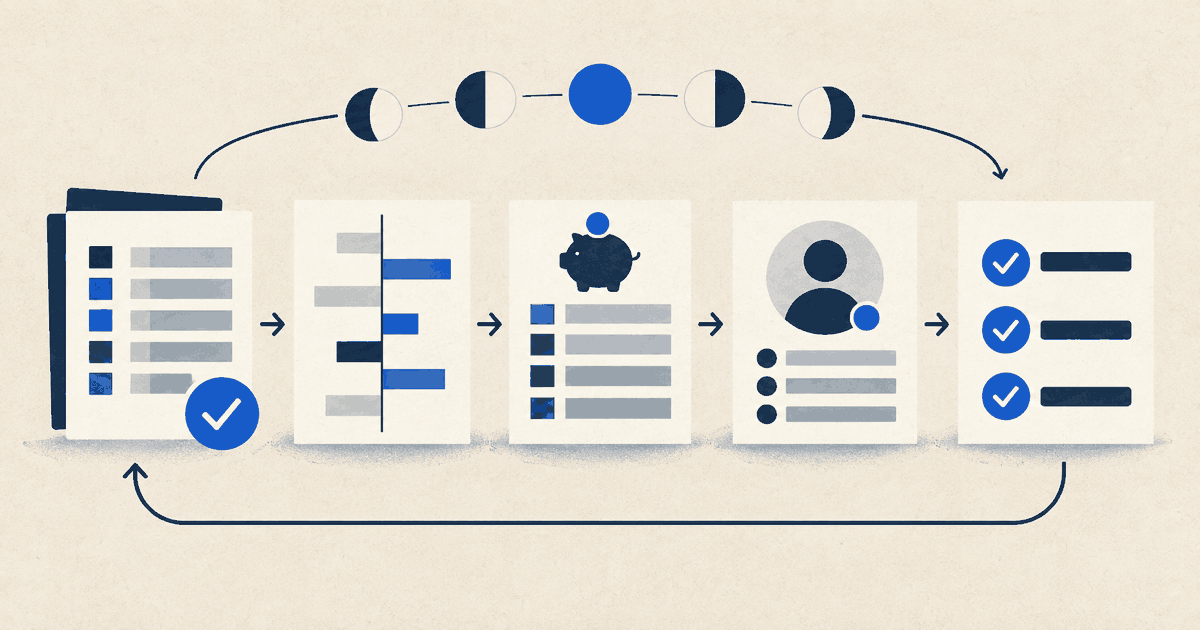
The approval sheet should fit on one page: closed baseline, agreed changes, unresolved assumptions, owner, and the next forecast review. For UK groups reporting in GBP as well as EUR, keep the conversion rule and reporting date on that sheet.
Read next
Monthly cloud cost review, budgets and cost report in the glossary.
Sources and method
Checked on 25 September 2026: AWS forecast, Azure budgets. The tables and review steps are Costfluent recommendations.